Underground vs Above-Ground STP: Space, Cost and Maintenance Compared
Here’s a question that rarely comes up until the drawings are half done: where does the sewage treatment plant actually go?
Most people start with technology. MBBR, SBR or MBR? Fair enough. But the plant’s position on your plot decides how much land you give up, how much civil work you pay for, and how easily a technician can reach a blower on a bad day.
Underground plants save surface space. Above-ground plants are easier to get at. Neither one wins every time. It depends on your plot, your budget and the people who’ll run the plant for the next 15 years.
Ravi Enviro Industries Pvt.Ltd is a Vadodara-based water and wastewater treatment manufacturer. It helps developers and industries compare these layouts against their actual site before anything is built.

Why This Decision Matters More Now
India generates a lot of sewage, and treatment hasn’t kept up. CPCB’s assessment put daily sewage generation at 72,368 MLD against an installed STP capacity of 31,841 MLD, about 44 per cent. Only around 20,235 MLD was actually being treated. Gujarat does better than most. It treats about 54 per cent of what it generates. CPCB also expects sewage generation to cross 1,20,000 MLD by 2051.
That data comes from CPCB’s 2021 assessment, the most recent national figures people could find. The direction is clear anyway. More buildings and factories will need their own plants, and many will have to fit them onto tight plots.
What’s The Actual Difference?
An underground STP sits below ground level. You’ll usually find it under a parking area, a landscaped patch or a service zone. The tanks and treatment chambers stay buried. Only the access covers, ventilation points and equipment rooms show above the surface.
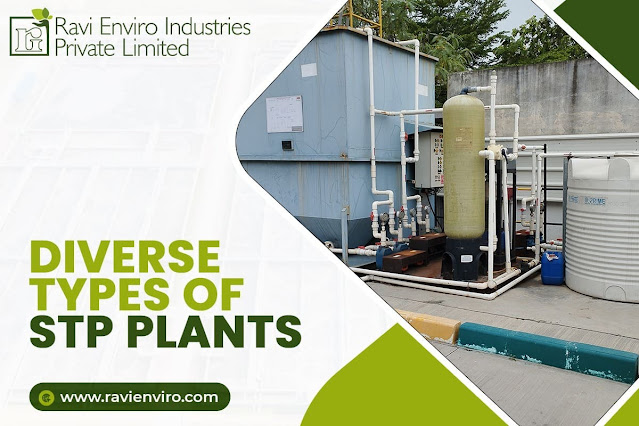
An above-ground STP sits at ground level in a utility area or service yard. It may use RCC tanks, fabricated steel or prefabricated units.
The treatment process doesn’t change. MBBR, SBR and MBR all work in either layout. What changes is how the plant is built, reached and serviced.
Installation Cost: Where The Money Goes
Cost depends on capacity, technology, materials and the site. Where you put the plant can swing the budget more than you’d expect.
Underground plants bring extra civil work. Someone has to dig the pit, haul the soil away, cast the tanks and waterproof them. Then the walls need reinforcing too. If the water table is high or the soil is poor, the engineering bill grows further.
Above ground, you dig much less. A prefabricated unit can also be up and running sooner. They aren’t free of cost, though. You’ll still pay for foundations, piping, electrical connections and a proper equipment layout.
One habit saves a lot of grief. When you compare quotations from STP plant manufacturers in India, don’t compare equipment prices alone. Find out who pays for the civil work. Who installs it? Who tests and commissions it? A cheap quote often leaves one of these out, and you find out after you’ve signed.
Maintenance: What You’ll Live With For Years
Things break in a sewage plant, mostly the moving parts. Pumps and blowers run all day, so they need regular attention.
Underground, the technician has to go down into a closed chamber. That’s risky work. You need fresh air pumped in, good light and a safe way in and out, with someone watching from the top. And if the hatch is too small, a dead blower can’t come out without breaking the slab.
An above-ground plant is simpler. You can see the whole thing from one spot. A leak or a strange noise gets noticed on a routine walk-round, long before it turns into a breakdown.
So when you shortlist sewage treatment plant suppliers in India, ask to see the drawing. A brochure won’t tell you where the technician will stand. Is there room to work? Is there a safe way in? Can a large piece of equipment come out without demolition?
Ventilation, Odour And Safety
Sewage smells, and it gives off gas. It’s worst near the collection tank and wherever sludge is handled.A buried plant has nowhere for that air to go, so it needs real ventilation. That means fans and ducting, plus something to treat the air before it goes out. Before anyone enters, they should test the air for gas. No test, no entry.
Above ground, the wind does a lot of the work. Even so, position matters. A plant next to a neighbour’s window will draw complaints however well it’s run.
Both layouts need sturdy covers, barriers, drainage and sound electrical safety.
Which Layout Suits An Industrial Site?
Factories differ a lot. Some have acres to spare. Others have a crowded plot and strict site-planning limits.
If you’re looking for a sewage treatment plant manufacturer in Jhagadia, start with five questions. How much land is free? How much sewage do you produce each day? What’s the soil like? How high is the groundwater? Will you expand?
A site with a dedicated utility area can use an above-ground plant. Where surface space is short, an underground plant is worth considering, as long as the soil and structure can take the excavation.
Remember that a factory with process effluent also needs a separate effluent treatment plant. The STP covers the domestic sewage from toilets and canteens.
Quick Comparison

Treat these as general guides. Actual cost and upkeep depend on your plant design and site.
What To Check Before You Pick A Supplier
Go through these before you sign anything:
Capacity: Will the plant cope with your daily flow, peak hours included?
Technology: Does your project suit MBBR, SBR or MBR?
Site assessment: Has anyone checked the soil, groundwater, space and access?
Maintenance: Can a technician safely reach every pump and blower?
Scope: Do the quote and contract cover civil work, electricals, commissioning and operator training?
After-sales: Who supplies spares, and who picks up the phone when something breaks?
Weighing an stp plant supplier in Jhagadia? Ask how far they’ll adapt the layout to your plot. A fixed catalogue design may not suit your plot. If you’re comparing an STP plant manufacturer in Vadodara, ask about design capability, installation support and the service plan after handover.
Ravi Enviro Industries Pvt.Ltd builds its treatment solutions around the project in hand. It has over 53 years of experience and makes most of its equipment in-house. That covers STPs, package plants, filters, ultrafiltration and RO systems. It also takes on operation and maintenance contracts with trained manpower, plus treatability studies and plant revamping. So the team that designs your plant can stay on to keep it running.
Conclusion
Before you decide, walk the plot with your architect and look at where the plant could realistically go. If the only free space is under the parking, the choice is made for you. If there’s an unused corner behind the building, you have a real decision to make.
Underground saves surface area and costs more to build. It’s also harder to service, since someone has to go down there with a torch and a gas monitor. Above-ground is the opposite. It’s cheaper to put up, you can see everything at a glance, and you lose a patch of land for good.
Get the soil and groundwater checked early, and ask each supplier who will service the plant after handover. Those two answers settle most of it.
If you’re planning an STP, send Ravi Enviro Industries Pvt.Ltd your daily sewage volume, a rough site sketch and your budget. Their team can tell you which layout is likely to suit your plot.
FAQs
1. Does an underground STP cost more?
Usually, yes. You’re paying for excavation, RCC tanks and waterproofing, and a high water table can push the cost up further. Still, ask for a full quote that includes civil work. Equipment price alone tells you very little.
2. What makes underground maintenance difficult?
Getting to the equipment. A blower in a buried chamber needs ventilation, light and a safe way in. If the access opening is too small, you can’t take the blower out when it fails.
3. Can I use MBBR in either layout?
Yes. MBBR is a treatment method, not a layout. It works in an underground tank or an above-ground one.
4. Which one suits a factory?
If you have a free corner of land, go above-ground and save the civil cost. If space is tight, underground can work, but only after a soil check.


Comments
Post a Comment